
The Go Bag Checklist Every NYC Family Needs Right Now
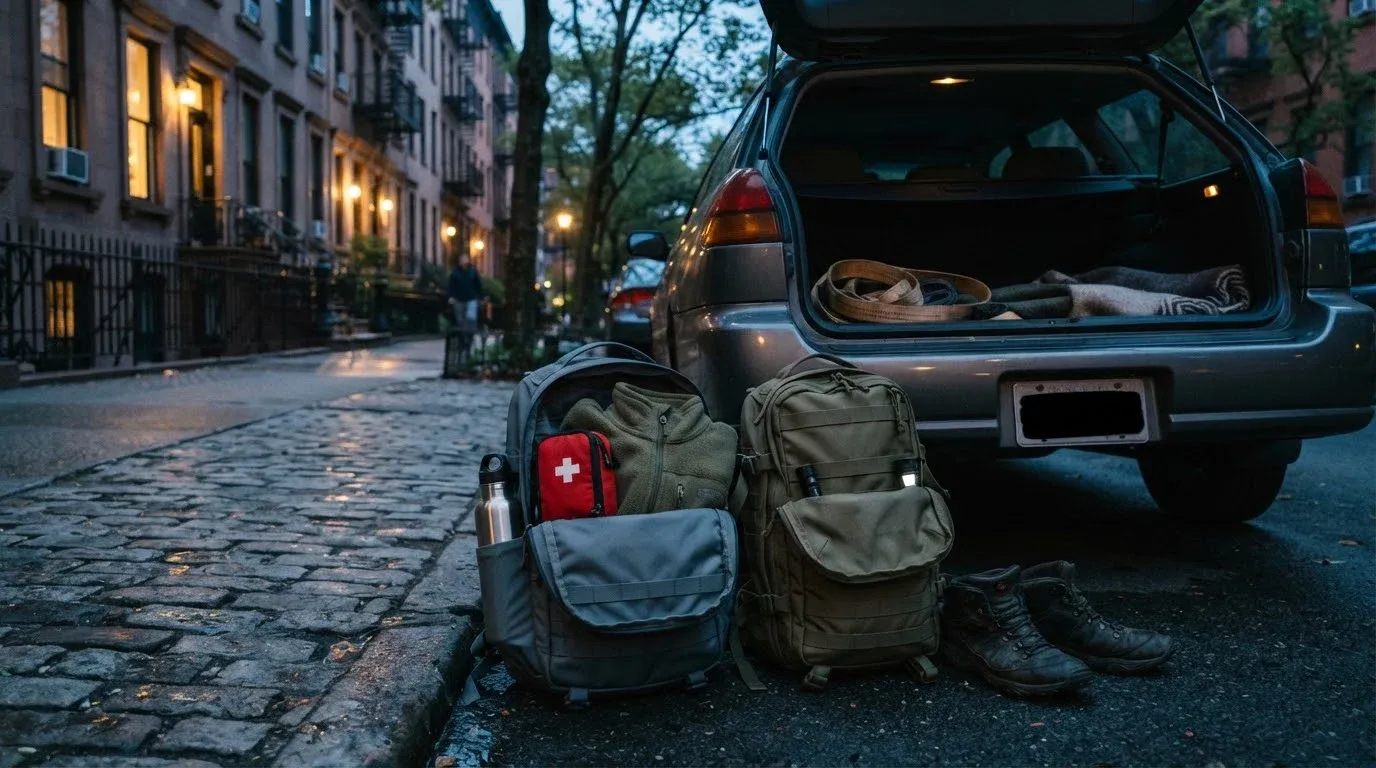
A few days ago I wrote about how to prep a family of four for 90 days in NYC. Today I want to get to the part I think matters most: the bag you grab when you have to leave.
Let me say it again: nobody has warned of an imminent civilian blackout. But NYC Emergency Management still plans around short windows of days, and it only takes a dead boiler, a stalled elevator or a shutdown to push you out the door. When that happens, you don’t want to be hunting for a flashlight. You want to grab one bag and go.
Two bags, two jobs
I like to keep two, because they solve different problems.
| Home go bag | Car go bag | |
|---|---|---|
| Job | Get you out and to a safe zone | Get you on foot to a safe zone, or back home |
| Plan for | About 72 hours | A long, cold walk |
| Where it lives | By the front door. If you’re in an apartment, plan to skip the elevator | In the trunk, with a winter kit added in cold months |
| Priorities | Water, food, meds, documents, cash | Walking shoes, layers, light, battery bank, water filter |
Before you pack anything, sit down with your family and pick two safe zones and two meeting spots. Figure out two ways out of your neighborhood and two ways home from work, then walk them once. You don’t want those routes to be new on a bad day. Agree on a check-in text too, since texts often get through when calls won’t.
Food and water
Think of food as fuel for a long walk. The WHO puts the minimum emergency ration at 2,100 calories per person per day, so a 72-hour bag needs around 6,300 per person. Pick things that need no cooking and can take a beating:
- Energy bars, nut butter packs, jerky, trail mix and dried fruit
- Ready-to-eat pouches or pull-tab cans of tuna or sardines
- Oral rehydration salts or electrolyte packets
- A metal cup, and a camp stove only if you know how to use it safely outdoors
Water is where people get tripped up. A family of four needs about 12 gallons for 72 hours, and that’s roughly 100 pounds. You can’t carry that out the door. So each person carries about two liters, plus a hollow-fiber filter and a small bottle of unscented household chlorine bleach to treat more. Keep the big water reserve at home, and rotate your food and water every six months so nothing in the bag goes bad.
Clothing and weather protection
It’s late November, so cold and wet are your biggest enemies right now. Dress for today, and pack for the next season too.
- Two pairs of wool or synthetic socks (never cotton) and a spare base layer
- A warm hat, gloves and a rain shell or poncho
- Broken-in walking shoes or boots in the car bag, so you aren’t hiking miles in dress shoes
- A compact emergency blanket for each person
- A bandana or buff, which doubles as a face covering or a bandage
One tip: keep cotton away from your skin. It holds moisture and will chill you fast.
Medications, documents and cash
This is the one people forget most, and it’s the hardest to fix once things go sideways.
- A 7-day buffer of every prescription in labeled original containers, plus a printed list of your meds and doses
- Over-the-counter basics: pain reliever, anti-diarrheal, antihistamine
- A trauma-focused first aid kit with bandages, gauze, tape, antiseptic wipes and a tourniquet, plus the training to use it
- Spare glasses or contacts, and any medical devices you depend on
- Waterproof copies of your IDs, insurance cards, lease or deed, and emergency contacts
- Small bills ($1s, $5s and $20s) for the corner bodega
Talk to your pharmacist about a legal buffer of your daily meds. And if you rely on electric medical equipment, sign up for Con Edison Special Services or National Grid Special Protections, like I mentioned in my last post.
Light, comms and your EDC
When the power’s out across a city, it gets dark and confusing fast. A little light and a way to get news go a long way.
- A bright flashlight and a headlamp, with spare batteries stored separately so they don’t drain
- A charged power bank and cables for every phone
- A hand-crank or battery AM/FM and NOAA weather radio
- A multi-tool, a whistle and a lighter
- A Notify NYC signup, done before you need it
If you carry for self-defense, think this through ahead of time. The rules on carrying, storing and transporting firearms and ammo in New York, and especially New York City, are strict and they change. Double check what’s allowed right now before you pack anything, including how you can store ammo in a vehicle. Keep spare ammo and a spare magazine for your EDC in a secure container, separate from the firearm, away from kids, and out of a car that bakes in summer or freezes in winter. This isn’t legal advice, so check with a qualified instructor or attorney.
Go bags for families with kids
Kids change everything. They get tired and cold faster, and they need comfort as much as supplies. Give each child their own small bag, and rebuild it as they grow.
- Comfort: a favorite small toy or stuffed animal, a book and a deck of cards
- Food they’ll actually eat: familiar snacks, plus formula, baby food and bottles for infants
- Hygiene: diapers, wipes and a change of clothes in a size that still fits, checked every season
- Medicine: child-appropriate doses of fever reducers, based on your pediatrician’s guidance
- ID: a card in each child’s pocket with their name, your phone number and any medical needs, plus a recent photo of them in your own bag
Make it a family thing. Let the older kids help pack, talk through the plan together, and practice your meeting spot so a real emergency feels familiar. And keep any firearm gear and ammo out of the kids’ bags entirely and locked away from them.
Keep your bags ready
A go bag only helps if it’s current. Set a reminder every six months to swap out food, water and meds, update the kids’ clothing sizes, and test your lights and radio. Then do me a favor and put the bag on your back and walk around the block. If it’s too heavy, it won’t get you far when it counts.
At Oak Arms Training Group, we help people build the skills that make their gear count. If you want hands-on training to go with your preparation, get in touch and we’ll help you build a plan that fits your household.